Are you struggling to balance cost and quality when sourcing stainless steel pressure cookers for your brand? Choosing the wrong material can lead to safety issues, brand complaints, and higher replacement costs. As a leading stainless steel pressure cookers manufacturer, Linkton offers a practical guide, providing B2B buyers with actionable insights on 304 vs 201 stainless steel pressure cookers, including OEM considerations, safety, durability, and sourcing best practices.
304 VS 201 Stainless Steel Pressure Cookers: Material Composition and Performance Comparison
Chemical Composition
| Component | 304 Stainless Steel | 201 Stainless Steel | Impact on Performance |
|---|---|---|---|
| Nickel (Ni) | 8–10.5% | 0.8–1.2% | Corrosion resistance |
| Chromium (Cr) | 18–20% | 16–18% | Oxidation resistance |
| Manganese (Mn) | ≤2% | 5.5–7.5% | Health risk if leaching occurs |
| Carbon (C) | ≤0.08% | ≤0.15% | Welding and processing stability |
304 stainless steel provides higher corrosion resistance, better heat stability, and superior durability, making it the preferred choice for OEM production and export markets.
Physical Performance
- 304 Stainless Steel: Corrosion-resistant, strong tensile strength, stable heat conduction, excellent processing performance.
- 201 Stainless Steel: Prone to rust, easier to crack or deform under high temperature, shorter service life.
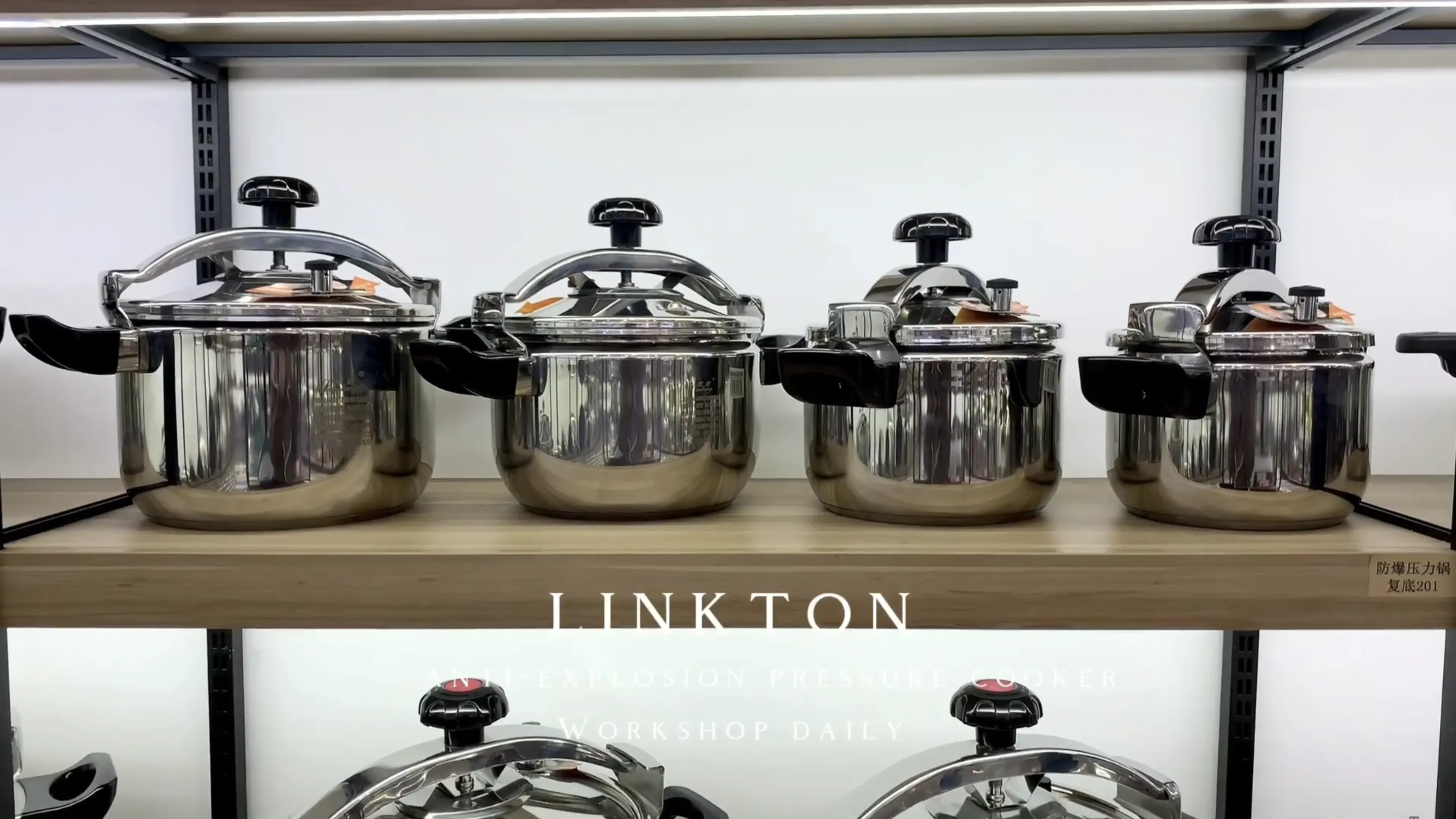
Safety and Health Considerations
Heavy Metal Leaching
201 stainless steel may leach manganese if improperly produced, posing long-term health risks. 304 stainless steel meets FDA and LFGB food-grade standards and poses negligible leaching risk during normal use.
Corrosion Resistance Test
| Test Condition | 304 SS | 201 SS |
|---|---|---|
| 5% Acetic Acid Boiling | No change | Slight corrosion |
| 2% Citric Acid Soaking | No change | Spots appear |
| Tomato Sauce Stewing | Like new | Surface loses luster |
| Saltwater Exposure | No rust | Rusts in 48 hours |
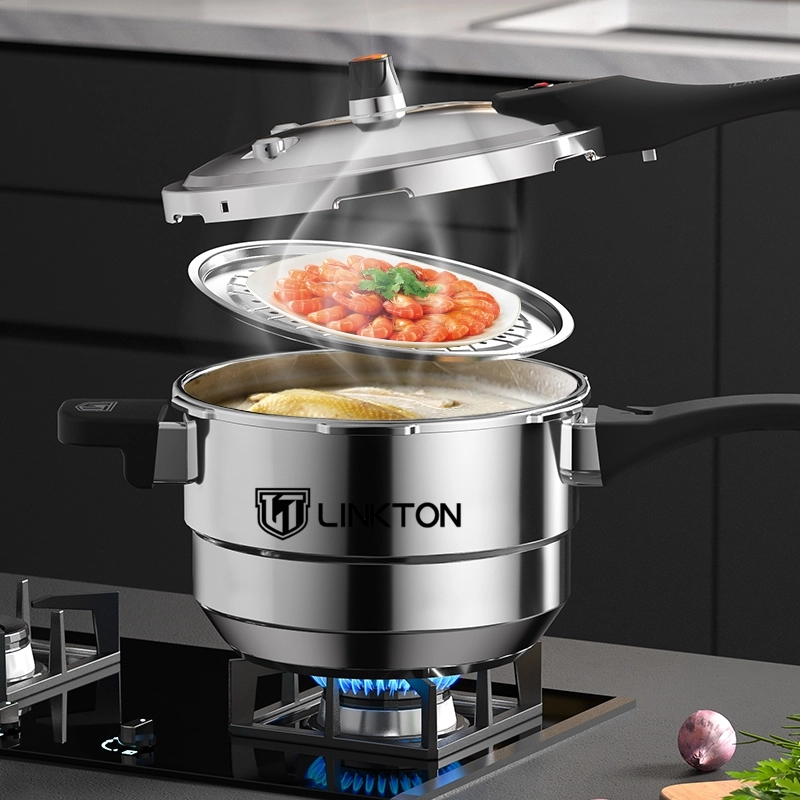
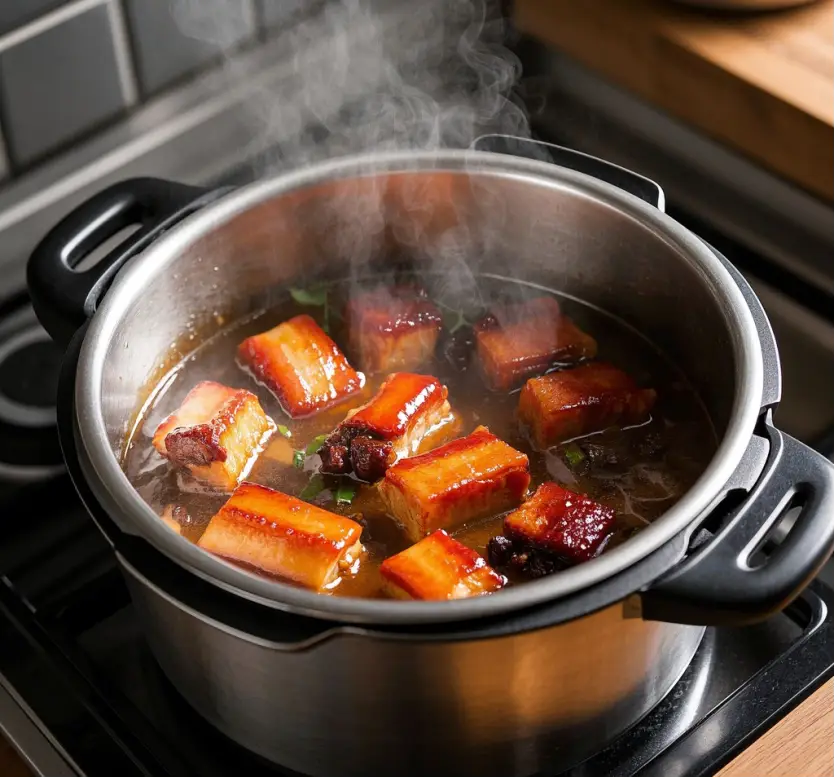
B2B Insight: For acidic foods or long cooking times, 304 stainless steel ensures consistent quality and reduces return rates.
Durability and Cost Analysis
Laboratory Test Results
| Test | 304 SS | 201 SS |
|---|---|---|
| Salt Spray Test | 96 h no rust | 24 h rust |
| Wear Cycles | 10,000 | 3,000 |
| Thermal Cycles | 5,000 | 1,500 |
| Pressure Fatigue | 100,000 | 30,000 |
Cost Comparison
| Material | Direct Cost (per unit) | Expected Service Life | Annualized Cost |
|---|---|---|---|
| 304 SS | ¥300–800 | 8–12 years | Higher when factoring in replacement |
| 201 SS | ¥150–400 | 3–5 years | Higher when factoring replacement |
Takeaway: 304 stainless steel may have a higher upfront cost but offers superior long-term ROI for B2B OEM brands.
Stainless Steel Pressure Cookers: Purchasing and Material Verification Tips
- Check chemical composition via a spectrometer or a certified testing lab.
- Magnet test: 304 is weakly magnetic, 201 is strongly magnetic.
- Surface luster: 304 is bright white; 201 is darker.
- Certification marks: SUS304, 18/8, FDA/LFGB labels.
- Price reference: Avoid “304” below ¥200 or unlabeled products.
OEM Considerations and Linkton Manufacturing Capabilities
When sourcing for private-label or export, OEM pressure cookers buyers must consider:
- Material consistency and batch verification
- Prototype-to-mass production alignment
- Intellectual property protection for molds and designs
- Third-party inspection during mid-production and pre-shipment
- Supply chain resilience and delivery timelines
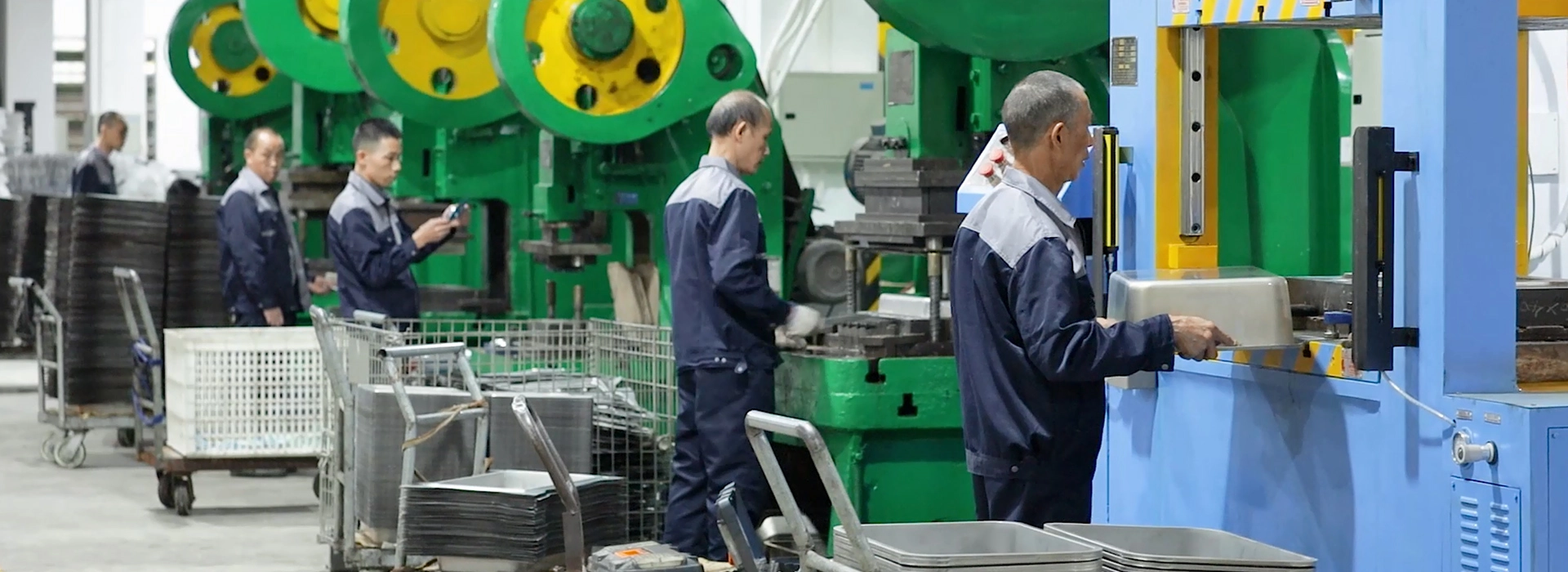
How Linkton Supports Reliable OEM Production
- Full process support: prototype → pilot production → mass production
- Certified 304 stainless steel supply for food-grade safety
- Batch quality inspection records and third-party verification
- Customizable lids, handles, packaging, and private labeling
- Sample iterations and engineering support to reduce production risks
Note: Even with Linkton’s professional services, buyers should maintain independent inspection and enforce clear contracts to ensure consistent quality and IP protection.
How do Pressure Cooker B2B Buyers Ensure Rights and Risk Mitigation?
- Verify factory certifications (ISO9001, CCC, FDA, LFGB).
- Include quality standards, AQL limits, and penalties in contracts.
- Request mid-production and pre-shipment third-party inspections.
- Keep purchase certificates and receipts for warranty and legal protection.
- Understand warranty and compensation policies for material fraud or defects.

Conclusion
For B2B buyers and OEM partners:
- 304 stainless steel is the optimal choice for safety, durability, and export compliance.
- 201 stainless steel may be acceptable for low-cost domestic products but carries a higher long-term risk.
- Procurement decisions should rely on data, third-party verification, and solid contracts, not solely on supplier claims.
- Linkton’s OEM practices provide a reliable reference for brands launching high-quality stainless steel pressure cookers.
Health, safety, and product consistency are priceless. Investing in certified 304 stainless steel and partnering with trusted OEM manufacturers like Linkton ensures compliance, reduces returns, and maximizes long-term ROI. Are you ready to launch your pressure cooker brand? Contact us for sample testing, mass production quotes, and customized solutions.