



Expanding your cookware portfolio with a high-margin, private label pressure cooker line is one of the most effective ways to drive brand growth. However, unlike standard cookware, pressure cookers are specialized pressure vessels that require strict structural engineering, precision tooling, and absolute safety compliance.
Launching a successful pressure cooker series requires a structured OEM/ODM partnership. Working directly with a primary manufacturer like リンクトン streamlines everything from custom mold development to international safety certification. This step-by-step guide explains how importers and retail brands can efficiently develop a high-performance pressure cooker product line.
Step 1: Define Your Target Market, Capacity, and Core Features
Before approaching a primary manufacturer, clearly define your target market and product positioning. Different regions have unique cooking habits, stove preferences, and capacity needs:
- Capacity & Size Matrix:
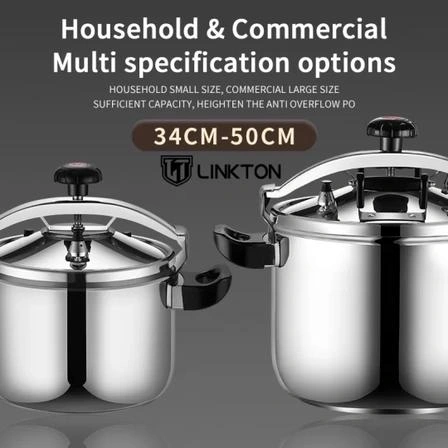
- Compact / Single-Serve (1L – 3L): Ideal for East Asian markets (Japan/Korea) focusing on single-person households and outdoor glamping.
- Standard Household (4L – 7L): The primary volume driver across European, North American, and South American retail channels.
- Large / Family Size (8L – 15L+): High demand in Middle Eastern and CIS/Russian markets for batch cooking and large family gatherings.
- Heating Base Engineering: Determine whether your market requires standard gas compatibility or universal 3-layer impact-bonded capsule bases optimized for induction cooktops (IH cookers).
Step 2: Select the Right Manufacturing Partner (OEM vs. ODM)
Choosing the right manufacturer is the foundation of product line development. Evaluate potential factories based on key operational capabilities:
- Private Tooling & Custom Molds (ODM): Does the factory have in-house engineering capabilities to customize lid handle mechanisms, body shapes, and valve placement?
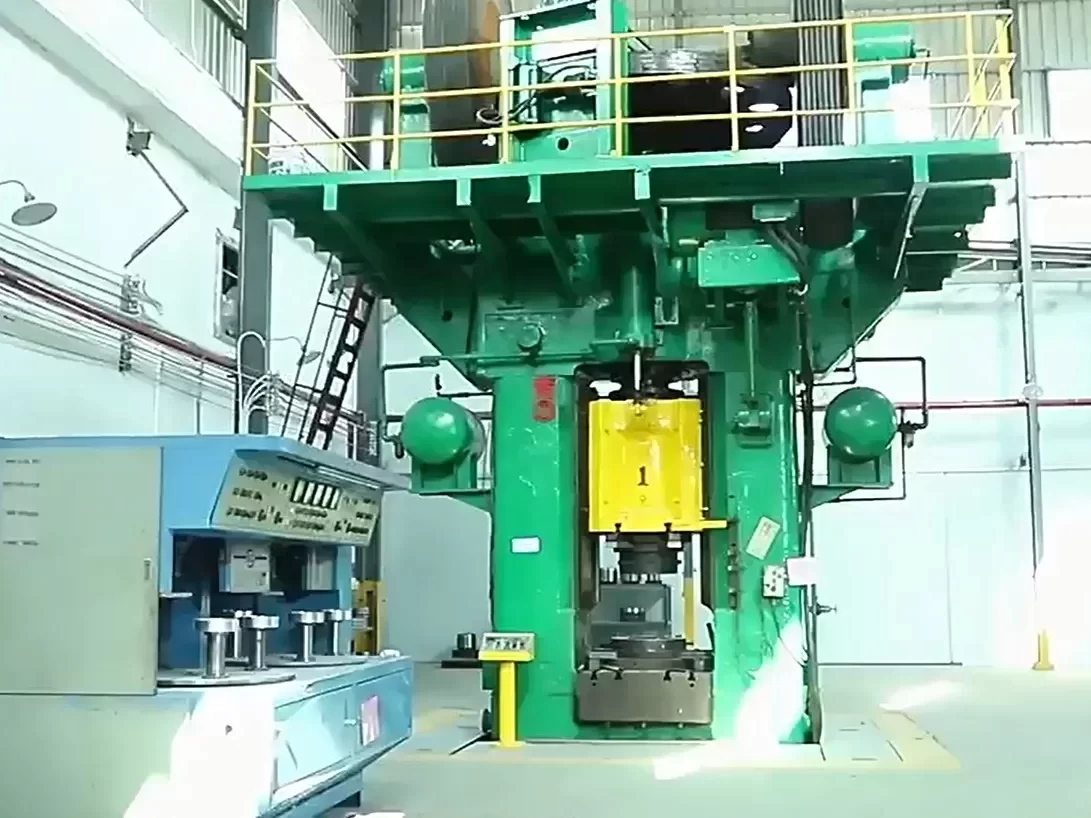
- Material Integrity: Ensure the manufacturer uses premium 304 (18/8) or 316 (18/10) food-grade stainless steel with full material traceability reports.
- Pneumatic Testing Standards: Verify that the factory conducts 100% pneumatic pressure testing on every single unit on the production line, rather than random spot checks.
Step 3: Engineering, Prototyping, and Safety Compliance
Pressure cookers are strictly regulated under international safety directives. Early coordination on technical standards prevents costly customs delays and compliance failures:
- Key Global Safety Certifications:
- Europe: EN 12778 & Pressure Equipment Directive (PED 2014/68/EU), LFGB food-contact safety.
- Eurasian Economic Union (Russia/CIS): EAC compliance (TR CU 010/2011) and GOST-R standards.
- North America: FDA compliance and UL/ETL safety guidelines.
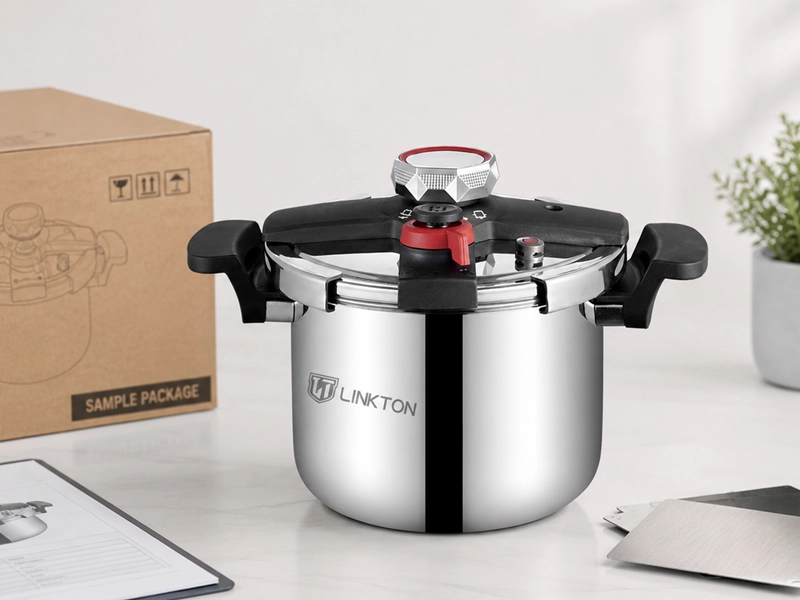
- Multi-Stage Fail-Safe Features: Ensure your custom design incorporates a primary pressure-limiting valve, backup safety valve, and emergency gasket pressure-release windows.
- Sample Testing & Validation: Linkton’s Engineering Team produces functional 3D prototypes and pre-production samples for physical drop testing, thermal shock testing, and pressure endurance audits before full-scale tooling.
Step 4: Private Label Customization and Brand Packaging
To establish strong retail brand identity, customize both the physical product and its consumer-facing packaging:
- Precision Surface Branding: High-precision laser etching of your brand logo on the pot body, handle end-caps, and induction base plate.
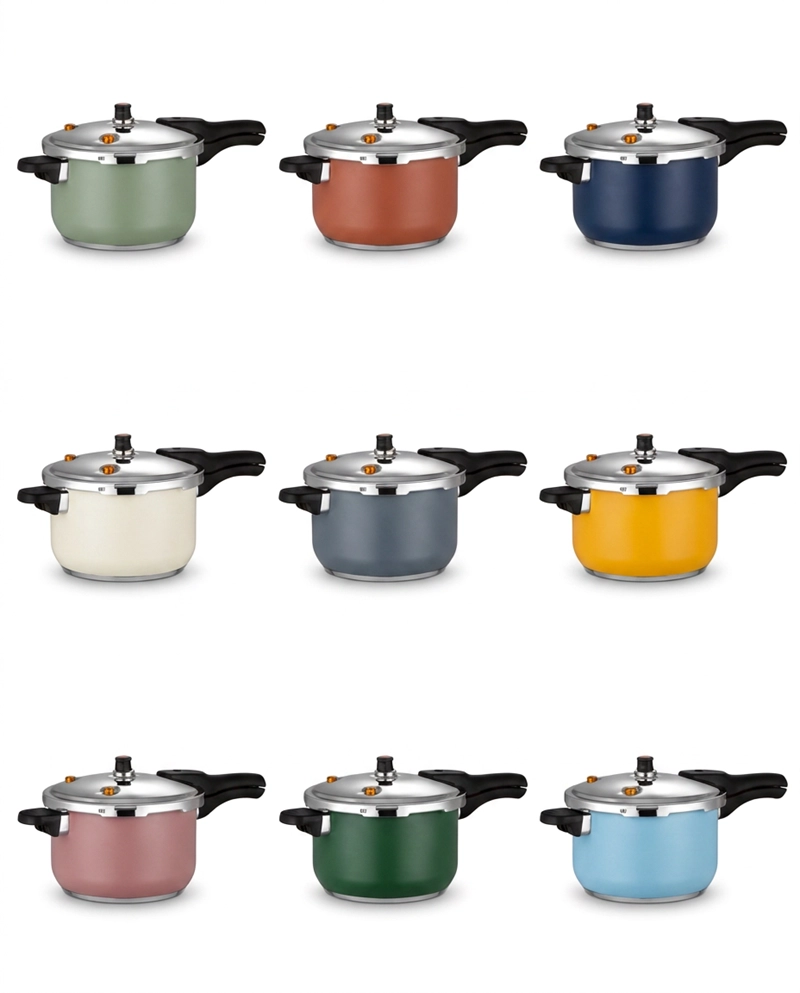
- Custom Handle & Knob Molds: Ergonomic Bakelite or stainless steel handles with custom color accents matching your brand palette.
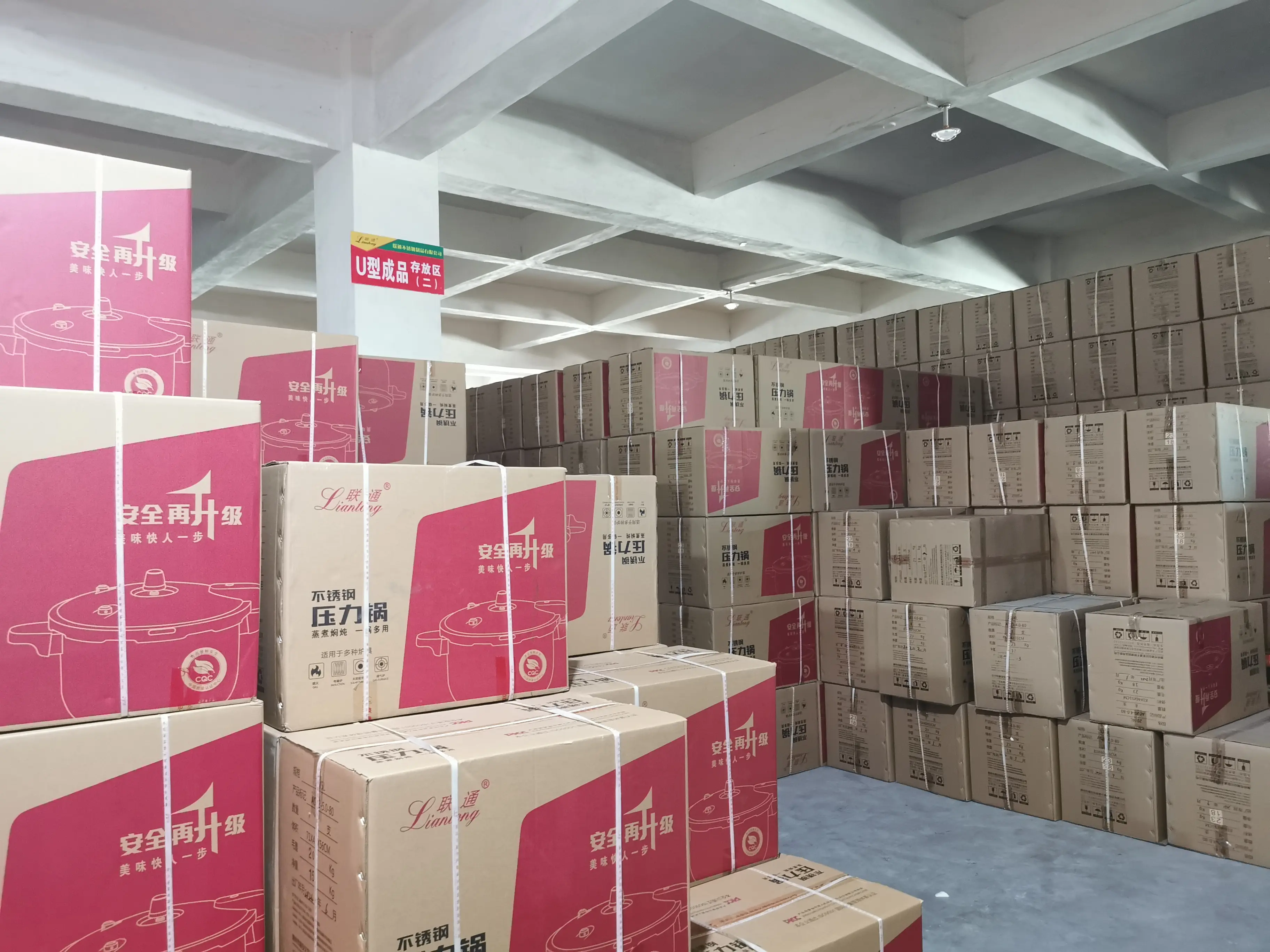
- Eco-Friendly Retail Packaging: Custom 5-layer corrugated color boxes featuring localized user manuals (in English, German, French, Russian, or Japanese), barcode integration, and shock-absorbing internal inserts to prevent transit damage during e-commerce fulfillment.
Step 5: Container Loading Optimization and Mass Production
Freight costs play a massive role in your landed cost per unit (LDP). Working with an experienced exporter ensures optimal shipping efficiency:
- Master Carton Engineering: Packaging engineers design outer cartons to eliminate empty air space while protecting handles and safety valves.
- CBM Optimization: Maximizing container density allows you to fit up to 15–20% more units per 40HQ container, directly lowering ocean freight costs to major ports worldwide.
Conclusion: Partner with Linkton for Turnkey OEM/ODM Success
Developing a custom pressure cooker line does not have to be complex. By partnering with リンクトン, you gain access to certified factory capacity, precision tooling support, and rigorous quality control engineered for global success.
🚀 Ready to Launch Your Custom Pressure Cooker Line?
Partner with a trusted primary manufacturer to turn your product vision into market-ready reality.
🔗 当社のWholesale Pressure Cooker Catalog または Contact the Linkton Engineering Team Today to discuss custom OEM/ODM development, request product samples, and get a tailored FOB/CIF factory quotation!